
The Constraint-Led Approach changes the coach's job. Instead of correcting every movement toward one ideal model, the coach designs practice problems that invite athletes to explore better solutions.
The coach becomes a designer of learning environments.
Every movement an athlete makes is a solution to a problem. Those solutions emerge from the interaction between the athlete, the task, and the environment. When coaches manipulate those constraints thoughtfully, they shape the information athletes use to perceive, decide, and act.
Let the Constraints Be the Teacher
Traditional coaching often assumes the athlete needs clearer verbal instructions. CLA starts from a different place: the body learns through context. The motor system does not respond only to explanations; it responds to affordances, spacing, timing, equipment, rules, opposition, and consequences.
The Three Types of Constraints
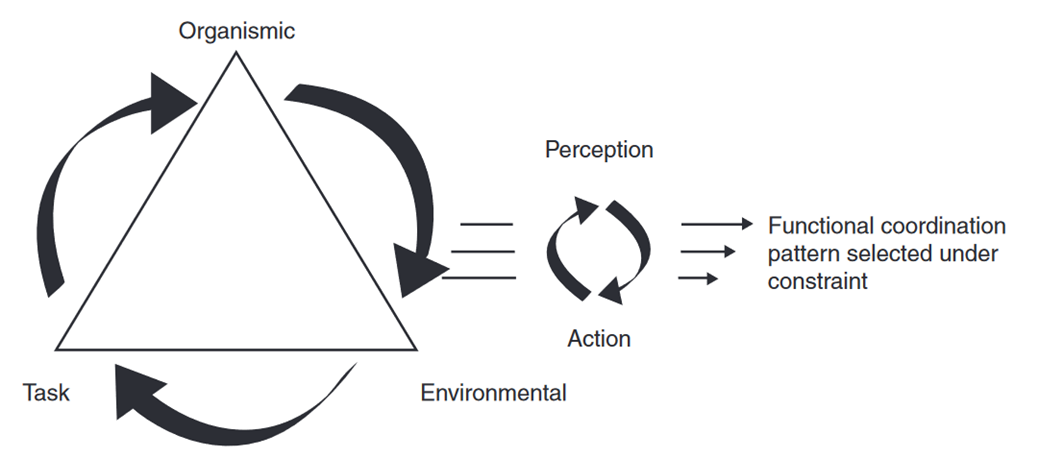
Task Constraints
These are the rules, goals, equipment, scoring systems, spaces, and task conditions the coach can directly modify. They are powerful because they guide behavior while still allowing athletes to search.
Individual Constraints
Each athlete brings different physical, perceptual, emotional, and experiential characteristics. The same practice task can invite different solutions for different people.
Environmental Constraints
Weather, surface, light, teammates, opponents, crowd noise, and competitive context all shape how athletes perceive and act. Good practice design respects those conditions instead of pretending they are irrelevant.
Less Telling, More Guiding
Feedback in CLA is not about giving the athlete every answer. It is about guiding attention: What did you notice? What changed when the space opened? What happened when the ball arrived higher or lower?
Constraints are not limitations. They are invitations. When coaches learn to design them well, athletes become more adaptable problem solvers.